
BPO blogs

Advantages and Disadvantages of BPO
All Blogs, BPO blogs

Advantages and Disadvantages of BPO: A Complete Guide in 2025

Advantages and Disadvantages of BPO For Applying BPO Course Click Here… What Is BPO and Why Is It Important Today? Business Process Outsourcing (BPO) is when a company hires an outside company to do certain business tasks or processes that it doesn’t want to do itself or thinks would be better to outsource.  Customer service, accounting, data entry, HR management, IT support, telemarketing, payroll, and more are all examples of these processes.  Companies work with specialised service providers instead of managing every function in-house. These service providers can do the work faster and for less money.  BPO has grown quickly in the last ten years because of globalisation, new technologies, and more competition among businesses.  Companies of all sizes, from small businesses to large multinational corporations, use BPO services to cut down on work, make operations more efficient, boost productivity, and focus on their core business strengths. Why Is BPO Important Today? What Are the Key Advantages of BPO? Business Process Outsourcing (BPO) has become one of the most powerful strategies for businesses looking to grow, scale, and stay competitive in today’s fast-changing market. From startups to multinational companies, organisations outsource various tasks—such as customer support, accounting, technical help, data entry, and HR management—to improve efficiency and reduce operational burdens. The advantages of BPO are wide-ranging and can significantly transform the way businesses operate. Below are the key advantages of BPO explained in detail: 1. Significant Cost Savings One of the biggest advantages of BPO is the reduction in operational costs. Outsourcing eliminates the need for businesses to invest in infrastructure, employee benefits, equipment, office space, and ongoing training. BPO companies operate in regions where labour costs are lower but the talent pool is competitive, allowing businesses to access high-quality services at a fraction of the cost. This financial flexibility helps companies allocate their budgets to more strategic areas like product innovation and business expansion. 2. Access to Skilled and Specialised Talent BPO firms employ trained professionals who specialise in specific business processes. Whether it is customer support agents, accountants, technical experts, or digital marketers, outsourcing gives companies access to highly skilled talent without spending months on recruitment and training. This ensures that businesses receive expert-level output from day one, enhancing performance and improving the quality of their operations. 3. Focus on Core Business Functions By outsourcing non-core tasks, companies can shift their attention to what truly matters—core strategic activities such as planning, market expansion, marketing, innovation, and customer engagement. When teams are not overwhelmed by administrative or repetitive tasks, they can contribute more effectively to business growth. This leads to better decision-making, improved productivity, and a stronger competitive advantage in the market. 4. Enhanced Efficiency and Productivity BPO firms operate with the latest tools, automated systems, and standardised processes that ensure faster and more accurate results. Many BPO companies use advanced technologies like AI-powered customer support, workflow automation, CRM systems, and analytics tools. This leads to: As a result, businesses benefit from smoother operations and improved overall productivity. 5. Scalability and Flexibility Business demands can change anytime—during peak seasons, new product launches, or market shifts. BPO offers unmatched flexibility by allowing companies to scale their services up or down without long-term commitments. For example: This agility helps companies stay efficient and responsive to market changes. 6. Round-the-Clock Customer Support To compete globally, businesses need to offer fast, reliable customer service. Many BPO firms operate 24/7 with multiple shifts and multilingual support, ensuring that customers receive assistance anytime, anywhere. This leads to improved customer satisfaction, better brand reputation, and higher retention rates. 7. Access to Advanced Technology BPO companies invest heavily in modern tools and technology, which many businesses might find costly to implement on their own. This includes: By outsourcing, companies gain access to these technologies without making large investments, helping them stay competitive in the digital age. 8. Reduced Risks and Improved Compliance Many BPO service providers follow strict global standards and regulations. They use advanced security measures, quality control teams, and compliance frameworks to ensure data protection and error-free service delivery. This reduces operational risks and helps companies avoid legal, financial, and compliance-related challenges. What Are the Major Disadvantages of BPO? Business Process Outsourcing (BPO) has many benefits, such as lower costs, access to skilled workers, and higher productivity. However, it also has some problems that businesses need to think about.  Relying too much on outsourcing can lead to problems with control, communication, data security, and long-term reliance.  To make smart business choices, you need to know about these problems. Below are the major disadvantages of BPO explained in detail: 1. Loss of Control Over Business Operations One of the biggest concerns with outsourcing is the reduced control over certain processes. When tasks such as customer service, billing, payroll, or technical support are handled by external providers, businesses cannot monitor every step closely. This loss of control may lead to: Although service level agreements (SLAs) help, the company still depends heavily on the outsourcing partner’s efficiency. 2. Communication Barriers BPO teams often operate from different countries or time zones. This can create communication gaps, misunderstandings, and delays in decision-making. Common communication challenges include: Poor communication can lead to reduced productivity, customer dissatisfaction, and mistakes in work output. 3. Data Security and Privacy Risks Outsourcing involves sharing sensitive information such as customer data, financial details, business strategies, and internal documents with external firms. This exposes businesses to risks such as: Even with strict contracts and security measures, the risk cannot be fully eliminated. Companies operating in industries like finance, healthcare, or e-commerce must be especially cautious. 4. Risk of Poor Quality Service Not all BPO companies maintain the same quality standards. Some may cut corners to reduce costs or may not invest enough in training and technology. This can result in: If the outsourcing partner fails to meet expectations, it directly affects the company’s image and customer trust. 5. Dependence on the Outsourcing Partner When a company outsources too many tasks, it becomes dependent on the service
What Is Quality Analyst in BPO
All Blogs, BPO blogs

What Is a Quality Analyst in BPO? Roles, Skills, and Career Scope Explained in 2025

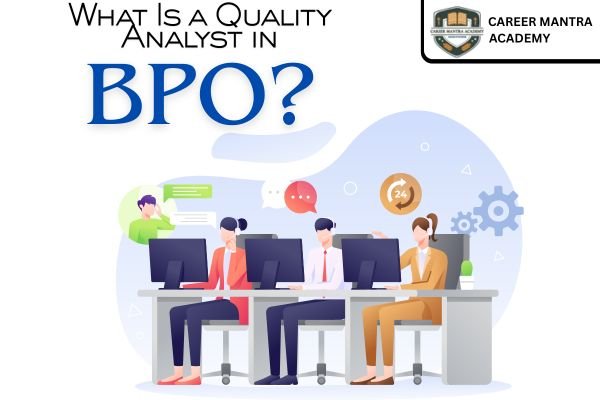
For Applying BPO Course Click Here… What Is Quality Analyst in BPO? In a BPO (Business Process Outsourcing) company, a Quality Analyst (QA) is very important for keeping and improving the quality of customer interactions, services, and processes.  Their primary responsibility is to monitor and evaluate calls, chats, or emails handled by customer service representatives to ensure that company standards, client expectations, and compliance requirements are met.   A QA carefully reviews communication for accuracy, tone, empathy, and adherence to company policies.   To make customers happier overall, they find mistakes, give feedback, and suggest ways to make things better.  Quality analysts do more than just evaluations. They also make quality monitoring forms, performance reports, and work closely with team leaders to put corrective actions into action.  QAs also hold calibration sessions and training programs to make sure that the team’s work is in line with the organization’s goals.  Their analytical approach helps lower mistakes, raise agent performance, and keep customer service delivery consistent.  In short, a Quality Analyst in a BPO is the link between management and the operations team. They make sure that every interaction meets the company’s quality standards.  For a business to be great in a very competitive outsourcing industry, it needs to keep customers, improve processes, and do all of these things. What Are the Main Roles and Responsibilities of a Quality Analyst? A Quality Analyst (QA) in a BPO is one of the most important people who make sure that the company always provides high-quality services to its clients and customers.  They are the backbone of quality assurance, always checking, watching, and improving performance at different levels of the business.  Here are the main duties and responsibilities of a Quality Analyst in detail: 1. Monitoring Customer Interactions 2. Conducting Quality Evaluations 3. Providing Constructive Feedback 4. Ensuring Compliance and Adherence to Policies 5. Identifying Training Needs 6. Preparing Quality Reports and Performance Dashboards 7. Conducting Calibration Sessions 8. Developing and Updating Quality Frameworks 9. Supporting Process Improvement Initiatives 10. Maintaining Customer Satisfaction 11. Mentoring and Coaching Team Members 12. Managing Escalations and Customer Complaints 13. Ensuring Continuous Improvement 14. Collaborating with Cross-Functional Teams 15. Meeting Client Expectations 16. Documenting Quality Processes 17. Managing Key Quality Metrics 18. Supporting Organizational Growth Why Is a Quality Analyst Important in a BPO? A Quality Analyst (QA) is very important in a BPO because they make sure that the quality of service is always high, that customers are happy, and that the company and client standards are met.  They find areas where agents aren’t doing their best, give them helpful criticism, and put in place plans to make agents more efficient.  QAs also help cut down on mistakes, keep an eye on how well people communicate, and make sure that every interaction with a customer is professional.  They help with decision-making and process improvement by looking at data and trends.  A Quality Analyst’s job is to make sure that the company provides high-quality, reliable, and customer-focused service. This helps the company build trust, keep clients, and achieve long-term business success. What Skills Are Required to Become a Successful Quality Analyst? To become a successful Quality Analyst (QA) in a BPO, you need a blend of technical expertise, communication skills, and analytical thinking. A QA must be detail-oriented and capable of evaluating performance with fairness and accuracy. Below are the key skills required to excel in this role: 1. Strong Communication Skills 2. Analytical and Critical Thinking 3. Attention to Detail 4. Process and Product Knowledge 5. Interpersonal and Coaching Skills 6. Technical and Reporting Skills 7. Time Management and Multitasking How Does a Quality Analyst Improve Customer Satisfaction and Performance? A Quality Analyst (QA) plays a key role in enhancing customer satisfaction and overall performance in a BPO by ensuring every customer interaction meets high-quality standards. Through continuous monitoring and evaluation, they help agents deliver accurate, empathetic, and effective service. Here’s how QAs contribute to improvement: What Is the Career Path of a Quality Analyst in BPO? A BPO Quality Analyst (QA) has a bright and promising career path.  One can move up from being a Customer Service Representative to a Quality Analyst after learning about the process and getting some experience.  If a QA does a good job and shows good leadership skills, they can become a Senior Quality Analyst, a Quality Lead, and finally a Quality Manager or Process Excellence Head.  Some people may also move into roles in Training, Operations, or Client Management.  This job lets you learn new things all the time, grow, and see how customer service and business operations are done to the highest standards around the world. What Qualifications or Courses Are Needed to Become a Quality Analyst? To become a Quality Analyst (QA) in a BPO, candidates generally need a bachelor’s degree in any field, preferably in business, communication, or computer science. Strong communication, analytical, and problem-solving skills are essential. Prior experience in customer service or process management is an added advantage. Many professionals enhance their skills through certifications such as Six Sigma, ISO Quality Management, or QA Training Courses. Specialized BPO quality assurance programs or courses from institutes like Career Mantra Academy help candidates gain practical knowledge, process evaluation techniques, and expertise in the tools needed to excel as a Quality Analyst. What Are the Challenges Faced by Quality Analysts in the BPO? The role of a Quality Analyst (QA) in the BPO industry is critical to maintaining service excellence and customer satisfaction. However, it is also filled with unique challenges that require patience, adaptability, and problem-solving skills. Quality Analysts are responsible for monitoring agent performance, ensuring compliance, and improving service quality — all while balancing tight deadlines and high expectations. Here are some of the major challenges faced by QAs in the BPO sector: Why Should You Choose Career Mantra Academy for a Quality Analyst Course? Career Mantra Academy is the ideal choice for a Quality Analyst course because it offers industry-focused training, expert faculty, and practical learning

Collection Process in BPO
All Blogs, BPO blogs

Understanding the Collection Process in BPO: Steps, Skills, and Career Opportunities in 2025

For Applying BPO Course Click Here… What Is Collection Process in BPO? The collection process in BPO (Business Process Outsourcing) refers to the systematic approach of recovering outstanding payments from customers on behalf of a client company. Many businesses outsource this process to BPOs to ensure timely recovery, reduce bad debts, and maintain healthy cash flow. The process is not just about asking for payments—it’s about managing customer relationships professionally while ensuring compliance with company and legal standards. Key aspects of the collection process include: Why Is the Collection Process Important in BPO? The collection process is one of the most critical operations in a BPO, as it directly impacts the financial stability and efficiency of client businesses. It ensures that overdue payments are recovered systematically while maintaining customer trust and compliance. Below are the key reasons why the collection process is important in a BPO setup: How Does the Collection Process Work in BPO? The collection process in BPO follows a structured workflow designed to recover outstanding payments efficiently while maintaining professionalism. The steps include: This process helps BPOs recover dues systematically while maintaining customer satisfaction and compliance. What Are the Different Types of Collection Processes in BPO? Based on who is doing the collections and what stage of debt recovery they are at, the collection process in BPO can be broken down into different groups.  It is important to know these types to manage accounts well, cut down on losses, and keep good relationships with customers.  In general, there are three main types of collections in BPO: First-Party Collections, Third-Party Collections, and Early-Stage vs. Late-Stage Collections.  Let’s look at each one in more depth. 1. First-Party Collections In first-party collections, the process is handled by the company or its dedicated BPO team representing the original creditor. This means the customer communicates directly with the organization or its authorized representatives. Key Characteristics: Example: If a telecom company hires a BPO to follow up on customers who have missed their monthly bill, the agents make reminder calls and emails as part of first-party collections. Advantages: Disadvantages: 2. Third-Party Collections In third-party collections, the original company outsources the recovery of overdue payments to an external agency. The BPO or collection agency works independently and usually becomes involved when internal efforts fail to recover the debt. Key Characteristics: Example: If a credit card company cannot recover payments for several months, it may hand over the account to a third-party collection agency to pursue repayment. Advantages: Disadvantages: 3. Early-Stage vs. Late-Stage Collections Another way to classify collections is based on the timing and severity of delinquency—these are known as early-stage and late-stage collections. Early-Stage Collections: Example: A BPO calling customers 10 days after a missed EMI payment for a car loan would be performing early-stage collection. Late-Stage Collections: Example: A BPO handling customers who haven’t paid their credit card bills for 6 months would manage late-stage collections. Advantages: Disadvantages: Steps Involved in the Collection Process: The collection process in BPO is a structured series of actions designed to recover overdue payments from customers while maintaining professionalism and compliance. Each step plays a vital role in ensuring efficiency, customer satisfaction, and financial recovery for the client. Below are the major steps involved in the process, based on Account Identification, Customer Communication, Payment Negotiation, and Follow-up & Escalation. 1. Account Identification The first and most crucial step in the collection process is identifying accounts that have pending or overdue payments. This stage involves gathering and analyzing data from the client’s financial system to determine which customers have not made payments within the agreed-upon timeline. Key activities in this stage include: Importance: This step ensures that only valid and genuine overdue accounts are targeted. Proper identification minimizes errors, prevents unnecessary customer disputes, and helps agents focus on accounts that require immediate attention. 2. Customer Communication Once the overdue accounts are identified, the next step is establishing communication with the customer. This stage is critical because the way a collection agent interacts with the customer can determine whether payment will be made quickly or delayed further. Methods of communication include: Best practices during customer communication: Importance: Effective communication forms the foundation of a successful collection. It helps clarify misunderstandings, reinforces the importance of payment, and maintains the company’s professional image. 3. Payment Negotiation Not all customers can pay their dues immediately, which is why negotiation becomes a vital part of the collection process. Skilled negotiation can turn a delayed payment into a recovered one without damaging customer relationships. Key elements of payment negotiation include: Tips for successful negotiation: Importance: Payment negotiation is where human skills truly shine. An effective negotiator helps recover money while keeping the customer relationship intact, making it one of the most valuable skills in BPO collections. 4. Follow-up and Escalation Once a payment commitment is made or a partial payment received, follow-up becomes essential to ensure the remaining balance is cleared on time. This step also includes escalation when a customer repeatedly fails to pay or respond. Follow-up activities include: Escalation methods include: Importance: Follow-ups ensure accountability and timely payments, while escalations handle stubborn cases that require additional intervention. Together, they maintain the flow of recovered funds and prevent accounts from turning into bad debts. What Career Opportunities Are Available in the BPO Collection Process? Job Role Description Key Responsibilities Skills Required Career Growth / Next Step Collection Executive / Agent Communication, negotiation, empathy, and patience. Calling customers, explaining dues, updating payment details, and maintaining records. Communication, negotiation, empathy, and patience. Promotion to Senior Agent or Team Leader. Senior Collection Executive Handles complex cases and supports junior agents with guidance and training. Managing escalated calls, handling large accounts, and training new agents. Leadership, multitasking, conflict resolution. Move to Team Leader or Quality Analyst roles. Team Leader (Collections) Supervises a team of collection agents and ensures targets are met. Monitoring performance, motivating the team, preparing reports, and managing escalations. Leadership, decision-making, problem-solving. Advancement to Process Trainer or Operations Manager. Quality Analyst (QA) Monitors

Why Choosing BPO
All Blogs, BPO blogs

Why Choosing BPO Career is a Best Smart Move in 2025

Why Choosing BPO What is BPO and Why is it Important? Business process outsourcing, or BPO, is the process by which organizations assign particular business functions or services to outside vendors.  Businesses often contract with specialized companies to handle tasks such as customer service, payroll, IT support, data entry, and even digital marketing, rather than handling them all internally.  BPO’s concept is straightforward: let professionals handle repetitive or technical tasks while the business focuses on its core competencies, such as strategy, sales, or product development.  Due to cost advantages and the availability of skilled talent, business process outsourcing (BPO) has grown to be one of the fastest-growing industries over the years, particularly in nations like the Philippines and India. Why is BPO Important?  BPO has become essential for both businesses and job seekers. Here’s why: BPO for Career Seekers Because it provides access to career opportunities, business process outsourcing (BPO) is equally significant for individuals.  BPO jobs are popular among recent graduates and young professionals who want to work with clients from around the world, gain experience, and hone their communication skills.  Additionally, it serves as a gateway to fields like marketing, finance, and information technology. 👉🏻 Final Thought Simply put, business process outsourcing (BPO) is significant because it benefits both parties: employees gain chances for skill and career advancement, and businesses save time and money while increasing performance.  Because of this, BPO is now an essential component of contemporary business strategy rather than merely an option. Understanding the Role of BPO: In today’s economy, business process outsourcing, or BPO, is far more important than most people realize.  It includes a broad range of services like finance, human resources, data management, IT support, digital marketing, and more. It is not just about call centers and responding to consumer inquiries.  The main idea is to let businesses concentrate on their strengths while assigning routine or specialized tasks to professionals.  Business process outsourcing (BPO) plays an important role by serving as a link between efficiency and businesses.  Outsourcing relieves businesses of the burden of creating sizable in-house teams while saving money, time, and guaranteeing high-quality services.  A small e-commerce company, for instance, might not have the resources to maintain a customer service department that is open around the clock, but by selecting a business process outsourcing (BPO) partner, it can offer seamless service to clients all over the world.  However, BPO gives workers a chance to advance their careers, acquire work experience, and hone critical abilities like technical knowledge, problem-solving, and communication. For Applying BPO Course Click Here… Why Choosing BPO for the Best Career? For young professionals, the Business Process Outsourcing (BPO) sector has emerged as one of the most exciting career paths. BPOs, which were formerly thought of as a job for new hires, have developed into organized career pathways with long-term prospects, skill development, and international exposure.  Let’s examine the various benefits of pursuing a career in business process outsourcing (BPO), which include cultural immersion and job stability. 1. Job Stability and High Demand One of the biggest concerns for professionals today is job security. With industries constantly changing due to automation and global competition, many careers face uncertainty. However, the Business Process Outsourcing (BPO) industry remains strong because businesses across the world continue to outsource services for cost savings and efficiency. This means a career in BPO (Business Process Outsourcing) is not just a temporary job—it can be a stable option with long-term growth. 2. Achieve Customer Satisfaction The heart of BPO (Business Process Outsourcing) lies in customer interaction. Whether it’s answering queries, solving technical issues, or providing financial assistance, BPO (Business Process Outsourcing) professionals are directly responsible for shaping customer experiences. For someone who enjoys helping others and making a direct impact, BPO offers a fulfilling environment where your efforts lead to real-time appreciation from customers and employers alike. 3. Career Growth Opportunities Gone are the days when BPO was seen only as an entry-level job. Today, BPOs provide structured career ladders, with opportunities to move into leadership, training, quality assurance, or even global management roles. This makes BPO an attractive industry not just for starting, but for building a long-term career. 4. Skills Development One of the strongest reasons to choose a BPO career is the skills you gain along the way. Unlike many jobs that focus on one domain, BPO jobs provide exposure to multiple areas. Key skills developed in BPO include: These skills are transferable, meaning even if you shift careers later, your BPO experience gives you a competitive edge in any industry. 5. Competitive Salaries and Benefits A common misconception is that BPO jobs pay less. In reality, the industry offers attractive salaries compared to many entry-level roles in other fields. For many young professionals, BPO is a practical choice to start earning a stable income while also enjoying financial perks. 6. Work-Life Balance While night shifts in BPO often get criticized, many companies today provide flexible working options to maintain employee well-being. This flexibility makes BPO attractive to students, young parents, or individuals who need adaptable schedules. 7. Diversity in Roles The BPO industry is not just about answering phone calls. It covers a wide variety of roles: This diversity allows individuals to choose roles that match their strengths—whether it’s communication, technical skills, or analytical ability. 8. Opportunity to Learn New Technologies Technology is at the center of modern BPO operations. Employees get access to cutting-edge tools such as: By working in BPO, professionals gain exposure to technology that many industries still lack, keeping them ahead of the curve in terms of digital knowledge. 9. Cultural Immersion BPO jobs often require professionals to interact with customers from different countries, time zones, and cultures. This provides a unique opportunity for cultural learning. For those who dream of working abroad or interacting with international clients, BPO serves as the perfect platform. 10. Equal-Opportunity Employment One of the strongest aspects of the BPO industry is its inclusive hiring policies. Unlike many traditional sectors, BPOs focus

What is Quality in BPO
All Blogs, BPO blogs

What is Quality in BPO? Metrics, Challenges, and Best Practices Explained in 2025

For Applying BPO Course Click Here… What is Quality in BPO? Delivering services that meet or surpass client expectations while guaranteeing accuracy, efficiency, and customer satisfaction is referred to as quality in BPO (business process outsourcing).  Quality in the cutthroat outsourcing sector refers to how well tasks are carried out, not just how many tasks are completed.  Customers rely on BPO firms to manage critical functions like data management, IT, finance, and customer service.  As a result, client loyalty, reputation, and business expansion are all directly impacted by service quality.  Accurate data handling, prompt solution delivery, adherence to industry standards, and sensitive data security are all important components of top-notch BPO services.  The customer experience—making sure each encounter is professional, sympathetic, and problem-solving—is equally crucial.  BPO firms use employee training, frequent performance reviews, and quality assurance (QA) frameworks to accomplish this.  Metrics that aid in measuring and upholding standards include Average Handling Time (AHT), Customer Satisfaction Score (CSAT), and First Call Resolution (FCR).  To put it briefly, quality in BPO refers to striking a balance between accuracy, efficiency, and customer-focused service.  Quality is the foundation of long-term success in the BPO sector because it guarantees that clients can depend on outsourcing partners to deliver value consistently. Why is Quality Important in BPO Services? Because it has a direct impact on customer satisfaction, brand reputation, and business growth, quality is essential in BPO services.  Businesses expect cost savings, dependability, and efficiency when they outsource processes to BPOs.  Both the client and the outsourcing partner may suffer from mistakes, delays, or disgruntled clients if the quality is subpar.  A high-quality service guarantees sensitive data protection, regulatory compliance, and operational accuracy.  Because every interaction reflects the client’s brand image, it also aids in fostering customer loyalty and trust.  Additionally, quality-driven BPOs lower risks and boost productivity by maintaining consistency through training, performance monitoring, and quality assurance frameworks.  Quality is the primary element that sets a successful BPO apart from the competition in today’s cutthroat market. What Factors Define Quality in BPO? In business process outsourcing, or BPO, quality extends well beyond task completion.  It stands for a service provider’s capacity to regularly produce outcomes that either meet or surpass the expectations of their clients.  Quality has a direct impact on customer satisfaction, compliance, brand reputation, and even profitability for businesses that outsource.  In the BPO sector, quality is defined by a number of important factors.  Let’s examine the most significant ones: 1. Accuracy and Error-Free Work Accuracy is the backbone of quality in BPO operations. Even a small mistake in data entry, billing, or customer communication can lead to financial loss, reputational damage, or client dissatisfaction. Why Accuracy Matters in BPO: Ways Accuracy is Ensured: Example: In a healthcare BPO, even a single error in insurance claims processing could lead to delayed reimbursements or legal complications. Accuracy in such processes directly defines service quality. 2. Customer Satisfaction Customer satisfaction is the ultimate measure of quality in BPO services. Regardless of how efficient or technically advanced a BPO is, its true value is judged by the end customer’s experience. Why Customer Satisfaction is Vital: How BPOs Ensure Customer Satisfaction: Example: A telecom customer who receives a quick resolution for a billing issue is more likely to remain loyal to the brand. Here, the BPO’s quality of service directly enhances customer satisfaction. 3. Timeliness and Efficiency In BPO services, timeliness and efficiency are as important as accuracy. Clients expect services to be delivered on time without compromising quality. Why Timeliness Matters: Efficiency as a Key Factor: How BPOs Maintain Timeliness and Efficiency: Example: In financial BPO, timely and efficient processing of loan applications ensures customer trust and better business performance for the client. 4. Compliance and Security Standards One of the most important factors in defining quality in BPO is compliance with regulations and ensuring data security. Since BPOs handle sensitive data, maintaining confidentiality and adhering to legal standards is non-negotiable. Why Compliance and Security are Critical: How BPOs Ensure Compliance and Security: Example: A healthcare BPO must strictly comply with HIPAA regulations while handling patient information. Non-compliance can lead to severe penalties and reputational harm. What is Quality Assurance in BPO and Why is It Needed? In business process outsourcing (BPO), quality assurance (QA) is the methodical process of tracking, assessing, and enhancing services to make sure they live up to client expectations and standards.  To produce reliable, superior results, it entails establishing benchmarks, monitoring performance, and spotting gaps. Why QA is Needed in BPO: In short, QA acts as the backbone of BPO operations, ensuring that every task is performed with precision, efficiency, and customer focus. Which Metrics are Used to Measure Quality in BPO? In business process outsourcing (BPO), quality measurement is crucial to ensuring client trust, operational effectiveness, and customer satisfaction.  It is impossible to determine whether services are fulfilling expectations or where improvements are required without the appropriate metrics.  BPO firms use a set of performance metrics that show how well internal operations are working as well as how satisfied clients are.  Average Handling Time (AHT), Net Promoter Score (NPS), Customer Satisfaction Score (CSAT), and First Call Resolution (FCR) are some of the most popular metrics.  Each of these contributes in a different way to the assessment of overall performance and service quality. 1. First Call Resolution (FCR) First Call Resolution refers to the percentage of customer queries or issues that are resolved in the very first interaction, without the need for follow-ups or escalations. Why FCR Matters in BPO: Key Benefits: Example: In a telecom BPO, if 90 out of 100 billing queries are resolved in the first call, the FCR rate is 90%, which is considered excellent. 2. Customer Satisfaction Score (CSAT) CSAT measures how satisfied customers are with a specific interaction, product, or service. Usually, it is captured through post-interaction surveys where customers rate their experience on a scale (e.g., 1 to 5). Why CSAT is Important: Key Benefits: Example: After an e-commerce support call, a

BPO Roles and Responsibilities
All Blogs, BPO blogs

Best Top 10 BPO Roles and Responsibilities: A Complete Guide to Careers in Outsourcing

What Is BPO and Why Does It Matter? Business Process Outsourcing (BPO) occurs when a business hires a third-party service provider to perform specific operations or procedures on its behalf.  Customer service, data entry, bookkeeping, human resources, technical assistance, and more are some of the tasks that may be part of these processes.  Companies typically utilize BPO to save time, reduce costs, and focus on their core competencies.  Companies can get better outcomes and be more efficient by outsourcing jobs that are repetitive or require particular skills.  BPO is vital because it helps businesses stay competitive in today’s fast-paced global economy.  For instance, outsourcing customer care lets businesses help customers 24/7 in multiple time zones, which makes customers happier and more loyal.  Outsourcing accounting or payroll tasks is another way for firms to keep things accurate and up to date without having to hire their own staff.  Another reason BPO is important is that it can help millions of professionals throughout the world find jobs and learn new skills.  The BPO industry is a big source of jobs in nations like India and the Philippines, where it helps the economy a lot.  BPO is very important for keeping costs down, productivity high, and customers happy.  Anyone who is thinking about a job in this developing field has to know what BPO roles and responsibilities are. For Applying BPO Course Click Here… Why Are BPO Roles and Responsibilities Important? It’s important to know what BPO roles and responsibilities are because they tell outsourcing companies how to run their businesses and give clients consistent value.  Every job in a BPO, from customer service to technical support to data entry to finance, has specific tasks that make sure the work goes smoothly, the quality is good, and the customers are happy.  Without these clearly defined roles, businesses would have trouble with inefficiency, miscommunication, and bad service.  When workers know what they’re supposed to do, they can do their jobs better, work better with their coworkers, and meet performance goals.  This not only makes things run more smoothly, but it also helps outsourcing companies and their clients trust each other more.  Also, structured BPO roles and responsibilities make people accountable, which is necessary for measuring performance and reaching business goals. Key Points on Importance: What Are the Different Types of BPO Services? Front office roles and back office roles are the two main categories into which BPO services are typically separated.  While both are equally crucial, they have different roles to play in making sure a business operates efficiently.  Recognizing the broad range of BPO roles and responsibilities is made easier by being aware of these differences. Front Office Roles Front office roles in BPO involve direct interaction with customers or clients. These roles are often customer-facing and focus on communication, problem-solving, and service delivery. Some common examples include: These roles are critical because they directly impact customer experience and brand reputation. Back Office Roles Back office roles in BPO focus on internal processes that support business operations but do not involve direct customer interaction. These roles ensure accuracy, efficiency, and compliance within an organization. Examples include: Back office roles are essential for keeping business operations streamlined and error-free, providing the backbone of organizational efficiency. What are the top 10 Keypoint BPO Roles and Responsibilities? The success of the BPO industry depends on the effectiveness of different roles, each with specific responsibilities. Here are some of the most important BPO roles and responsibilities: Customer Support Executives Customer Support Executives are the first people customers talk to when they have a problem.  Their main job is to talk to customers over the phone, by email, or in live chat to help them with questions, complaints, and service problems.  They need to be polite and professional, make sure customers are happy, and, if necessary, send complicated problems up to higher-ups.  Their performance has a direct effect on how loyal customers are and how well the brand is known. Technical Support Representatives Customer concerns about technical goods or services are addressed by technical support representatives.  They help users troubleshoot connectivity, hardware, or software problems.  They are responsible for diagnosing issues, offering detailed solutions, and recording cases for future use.  For this position, having strong technical knowledge and effective communication skills are essential. Data Entry Operators Data Entry Operators are in charge of entering, updating, and keeping accurate data in the company’s systems.  Their work helps with making decisions, writing reports, and making sure that work flows smoothly between departments.  Accuracy, paying attention to details, and keeping things private are very important because even small mistakes can cause big problems. Finance & Accounting Staff In BPO, finance and accounting professionals take care of payroll, accounts payable and receivable, tax compliance, and financial reporting.  It is their job to keep the finances accurate and make sure that transactions are processed on time.  They help businesses stay financially healthy and open by keeping records in order and following the rules. HR Support Human Resource (HR) support staff are in charge of things like hiring, onboarding, keeping employees happy, and processing benefits.  Their job is to keep the workforce running smoothly and keep employees happy.  They also help solve problems at work, make sure that labor laws are followed, and create a positive work environment in the BPO company. Team Leaders Team leaders keep an eye on how well their employees are doing every day, give them advice, and make sure that quality and productivity standards are met.  They also encourage and guide team members, deal with problems that have gotten worse, and tell managers how things are going. Quality Analysts Quality Analysts are in charge of checking customer interactions to make sure they meet the standards set by the company and the client.  They give feedback, suggest ways to make things better, and help keep service delivery at a high level. Trainers Trainers make and run training programs for both new and current employees.  Their job is to help

What is BPO Voice Process
All Blogs, BPO blogs

What Is BPO Voice Process? A Best Complete Guide for Beginners in 2025

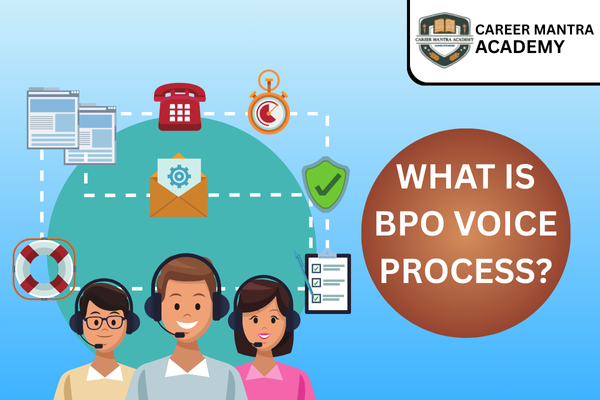
What is BPO Voice Process? BPO voice process is a part of Business Process Outsourcing (BPO) in which employees directly interact with customers on the phone to assist them, answer their questions, or sell them products and services.  It includes both inbound calls, where customers call for help, and outbound calls, where agents call customers to sell them something, get their feedback, or remind them of something.  The primary goal of a BPO voice process is to connect businesses with their customers, ensuring they are satisfied, fostering trust, and enabling the business to run more smoothly.  Voice process jobs require good communication skills, fluency in the language, and the ability to be patient with different customer needs.  Today, it’s one of the most sought-after jobs in the outsourcing field. For Applying BPO Course Click Here… What are the Types of BPO Voice Process? The BPO voice process is broadly categorized into two main types: inbound voice process and outbound voice process. Both play a vital role in strengthening customer relationships and supporting business growth. Inbound Voice Process: In this process, agents attend to incoming calls made by customers. These calls may include queries about products or services, complaints, requests for technical assistance, or general information. The agent’s responsibility is to listen carefully, understand the customer’s concern, and provide accurate solutions with a polite and professional approach. Common examples include customer service helplines, order tracking, banking support, and technical troubleshooting. Since the focus is on solving problems, this process demands patience, product knowledge, and strong communication skills. Outbound Voice Process: In contrast, outbound calls are initiated by agents to connect with customers. These calls usually involve telemarketing, sales pitches, lead generation, payment collection, surveys, or feedback requests. The objective is to promote services, build trust, and convince customers to take action. The outbound voice process requires confidence, persuasive communication, and the ability to handle rejection positively. What Does a Voice Process Executive Do? A voice process executive is the first point of contact between a company and its customers. Their role is not just about answering calls but about ensuring smooth communication, building trust, and providing solutions. Here are the key responsibilities explained in detail: What Skills are Needed for BPO Voice Process Jobs? To succeed in a BPO voice process job, candidates must develop a mix of communication, interpersonal, and technical skills. Below are the essential skills explained in detail: What are the Benefits of Working in a BPO Voice Process? Working in the BPO voice process offers several advantages that make it a popular career choice, especially for beginners. Here are some of the main benefits: What are the Challenges in BPO Voice Process? While working in the BPO voice process has many benefits, it also comes with certain challenges that employees need to manage effectively. Some of the common challenges include: How is BPO Voice Process Different from BPO Non-Voice Process? aspect voice process non-voice process mode of communication Interaction happens through phone calls (inbound or outbound) communication happens through emails, chat, or data entry customer interaction direct, real-time conversation with customers indirect, written, or system-based communication skills required strong verbal communication, listening, persuasion, patience good writing skills, typing speed, accuracy, analytical ability work nature involves answering queries, providing support, telemarketing, and sales involves handling back-office tasks, documentation, and technical support work environment more dynamic, with continuous calls and immediate responses relatively stable, with time to draft replies or process information stress level can be high due to difficult customers and real-time targets usually lower, as there is more time to respond and fewer live interactions career opportunities growth in customer service, sales, training, or operations management growth in data analysis, technical support, content management, or quality What are the Career Opportunities in BPO Voice Process? The BPO voice process is not just an entry-level job; it also opens the door to long-term career growth. With experience, employees can move into higher and more specialized roles. Some of the main career opportunities include: How Can You Succeed in BPO Voice Process Jobs? To do well in BPO voice process jobs, you need to be able to communicate well, be patient, and be flexible.  Clear and polite communication helps people see you as a professional, and active listening makes sure you understand what the customer is saying.  When dealing with angry callers, it’s important to be patient and understanding because these things help build trust and satisfaction.  It’s easier to give correct answers when you know a lot about the company’s products and processes, and it’s easier to handle calls when you manage your time well.  It’s important to learn how to stay calm under stress because the job is often high-pressure.  Being flexible, open to feedback, and always trying to get better at what you do are also good for growth.  Anyone can succeed and have a rewarding career in BPO voice process if they are dedicated and have clear career goals. Why is BPO Voice Process Important Today? Today, the BPO voice process is crucial because it puts companies and consumers directly in contact, guaranteeing prompt assistance, stronger bonds, and greater customer satisfaction.  Voice processes are used by businesses to provide round-the-clock service, answer questions, and address problems instantly in a competitive market.  Additionally, it facilitates lead generation, sales, and feedback gathering—all of which aid in the expansion of businesses.  The voice process is a valuable industry in today’s economy because it offers job seekers a wide range of employment opportunities and helps them develop critical communication skills. Conclusion. The BPO voice process is very important for businesses to connect with their customers, help them, solve their problems, and grow.  It gives workers chances to improve their communication skills, learn about other cultures, and build a strong career base.  The job has its challenges, like working under a lot of pressure and at night, but with hard work, patience, and a willingness to learn, you can succeed.  In general, the voice process is still an important

BPO Skills
All Blogs, BPO blogs

Best Top 10 BPO Skills Guide: Improve Your BPO Skills and Grow Your Career

What are the BPO skills? To do well in the business process outsourcing industry, you need to have BPO skills.  These include being able to talk to clients and customers, being able to solve problems to answer questions quickly, and being able to manage your time to meet deadlines.  It’s also important to have technical skills like knowing how to use BPO tools, being good with computers, and typing quickly.  In addition to these, soft skills like being able to adapt, work well with others, provide good customer service, be patient, and do more than one thing at once are very important for success and career growth in BPO. For Applying BPO Course Click Here… What are the most important BPO skills to build a successful career? To have a successful career in BPO, you need to work on your communication skills, both written and spoken. This is because they help you deal with customers well.  To solve problems quickly and build trust, you need to be able to listen actively and solve problems.  Professionals can do a lot of things at once and manage their time well.  You also need to know a lot about computers, be good at typing, and have good technical skills.  These BPO skills are the most important for career success because they help you grow over time. Teamwork, adaptability, and patience are also important. Why are communication skills considered the backbone of skills for BPO? Communication skills are the most important part of BPO skills because the industry is all about talking to customers, clients, and teams in different parts of the world.  Clear spoken and written communication helps you understand what your customers want, fix problems, and give them good service.  Good communication also builds trust, clears up misunderstandings, and makes customers happier.  Most BPO jobs involve voice processes, chat support, or email handling, so good communication has a direct effect on how well someone does their job.  Even if you know a lot about technology, you won’t be able to do your job well if you don’t have good communication skills. How can freshers develop the right skills for BPO careers? A step-by-step version for freshers to develop the right BPO skills: 👉 With consistent practice, freshers can quickly build the right skills for BPO careers. How do technical BPO skills improve performance at work? Technical BPO skills help you do your job better by making things go faster, smoother, and more accurately.  Employees can answer customer questions quickly and effectively if they know how to use a computer, type quickly, and know how to use CRM or ticketing software.  Data entry skills and basic knowledge of MS Office make sure that reports and records are kept up to date.  These technical skills cut down on mistakes, save time, and make people more productive.  When you add soft skills to your technical BPO skills, you can consistently provide better customer service, meet deadlines, and reach performance goals. How do time management and multitasking count as key BPO skills? Time management and multitasking are important skills for BPO workers because they help them meet tight deadlines and handle a lot of tasks and customer questions at once.  Good time management makes sure that work is done in order of importance and that service levels are met without stress.  Professionals can answer calls, emails, or enter data at the same time while still being accurate thanks to multitasking.  All of these skills work together to make people more productive, cut down on delays, and make customers happier.  In a fast-paced BPO setting, being able to manage your time and do more than one thing at once will help you do better at work and move up in your career. What future BPO skills will be in high demand? In the future, BPO skills will be based on both technology and working with people.  As automation and AI become more common, workers will need to know how to use digital tools, analyses data, and use CRM tools to run advanced systems.  People will want to know how to use AI to help them talk to each other, handle process automation, and be aware of cybersecurity.  Also, soft skills like emotional intelligence, adaptability, and problem-solving will always be important because machines can’t replace human empathy.  The right mix of technical and soft skills in BPO will determine how well you do in your career in the future. Future BPO skills that will be in high demand: Give some top 10 BPO jobs from BPO skills? BPO Job Role Description 1. Customer Support Executive Handles customer queries via calls, chat, or email. 2. Technical Support Associate Provides troubleshooting for software, hardware, or network issues. 3. Data Entry Operator Inputs and manages large volumes of data accurately. 4. Telemarketing Executive Promotes products or services through outbound calls. 5. HR & Recruitment Associate Manages hiring, employee records, and payroll in BPO processes. 6. Finance & Accounting Analyst Handles accounts, invoices, and financial reporting. 7. IT Helpdesk Support Assists employees/clients with IT-related problems and system support. 8. Content Moderator Reviews and filters user-generated content for compliance and safety. 9. Quality Analyst (QA) Monitors calls and processes to ensure service quality standards are met. 10. Team Leader / Supervisor Leads a team, tracks performance, and ensures targets are achieved. How do digital tools enhance modern BPO skills? Digital tools improve modern BPO skills by speeding up, making smarter, and making processes more efficient.  Employees can handle customer interactions more accurately and quickly with tools like CRM software, ticketing systems, and AI-powered chatbots.  Collaboration tools make it easier for people to work together, and data analytics tools help people make decisions and keep track of their performance.  Automation cuts down on repetitive tasks, which lets workers focus on solving problems and making customers happy.  By learning how to use these digital tools, professionals can improve their BPO skills, stay competitive, and provide better service in an industry that relies on technology.

Career in BPO
All Blogs, BPO blogs

Career in BPO: Best Opportunities, Skills, Salary & Future Scope in 2025 ?

Why Choose a Career in BPO? A career in BPO is a great choice for both professionals and new students, as it offers opportunities to learn new skills, provides a competitive salary, and offers numerous opportunities for rapid growth.  The industry encourages people to learn technical and communication skills, meet clients from other countries, and feel more confident.  Many BPOs offer quick promotions, rewards based on performance, and flexible work hours, which makes this a good career choice.  It also helps you get into other fields like management, sales, customer service, and IT.  Individuals who are willing to learn and adapt can have a stable and growing career in business process outsourcing (BPO), as India is a global outsourcing hub. For Applying BPO Course Click here What is BPO and How Does It Work? Business Process Outsourcing (BPO) is a practice where companies hire external service providers to handle specific business tasks, such as technical support, customer service, data entry, finance, or human resources.  Companies hire BPO firms to do these tasks for them instead of doing them all in-house. This saves money, makes things run more smoothly, and lets them focus on their main business. BPOs generally work in two categories: Key Points on How BPO Works: 1. Client Requirement Initially, a business determines which non-core but necessary processes—like payroll or customer service—to contract out to a business process outsourcing (BPO).  By doing this, the company can reduce expenses, concentrate on its core functions, and increase productivity. 2. Process Transfer The chosen process is then given to the BPO provider after the decision to outsource has been made.  This includes training, making sure the technology works with everything else, and writing down everything. 3. Service Delivery Trained staff handle the outsourced work using advanced tools, CRMs, and software. They ensure accuracy, timely delivery, and customer satisfaction while maintaining quality standards. 4. Monitoring & Reporting Performance is tracked through KPIs like response time, accuracy, and customer satisfaction. Regular reports are shared with the client to maintain transparency and ensure quality outcomes. 5. Continuous Improvement Feedback from clients and customers is used to improve service quality. BPOs regularly upgrade their technology, training, and processes to stay competitive. What are the Advantages of a Career in BPO? There are a lot of benefits to working in BPO, especially for people who are just starting or are young professionals.  It not only gives you a chance to make good money, but it also helps you grow as a person and in your career.  A lot of people start their careers in BPO because it leads to jobs in many fields, such as IT, sales, HR, and management. Key Advantages of a Career in BPO: 1. Easy Entry for Freshers Most BPO jobs require basic qualifications and good communication skills, making it easier for freshers to start their careers. 2. Skill Development Working in BPO helps employees improve communication, problem-solving, and technical skills. These skills are useful in every profession. 3. Attractive Salary & Incentives BPOs offer competitive salaries along with performance-based bonuses and incentives. 4. Career Growth Opportunities With dedication and performance, employees can grow from an executive role to team leader or manager in a short span. 5. Flexible Work Environment BPOs often provide flexible shifts, allowing employees to balance studies, family, or other activities. What Types of Jobs Can You Find in the BPO Sector? The BPO industry has a lot of job openings for both new and experienced workers. Depending on your skills and interests, you can choose from voice-based, non-voice, back-office, or technical jobs. Not only do these jobs pay well, but they also give you a lot of experience with how business works all over the world. Main Types of Jobs in the BPO Sector: 1. Voice Process Jobs These involve direct communication with customers over phone calls for support or sales. 2. Non-Voice Process Jobs These focus on backend support through email, chat, or data management instead of calls. 3. Back-Office Operations These jobs involve administrative and support tasks to help the company run smoothly. 4. Technical Support Jobs Specialised roles that help customers resolve technical issues with products or services. 5. Management & Leadership Roles With experience, professionals can grow into supervisory and managerial positions. Which Skills Are Important for Career Growth in BPO? Strong communication skills are the most important for getting ahead in a career in BPO because employees talk to clients and customers all the time.  Also, being able to solve problems, listen actively, and be flexible all help you deal with problems well.  Being able to use basic computer programs, do more than one thing at once, and manage your time well also makes you more productive.  Being a team player, staying professional, and always learning are also important skills that will help you succeed in the BPO industry and move up the career ladder. What Qualifications Do You Need to Join a Career in BPO? Because BPO doesn’t require a lot of education to get started, many new people want to work in this field.   To apply for entry-level positions, you typically only need to have completed the tenth grade or graduated.   Proficiency in computer usage, rapid typing, and fluency in English are all critical.   Employers may seek candidates with experience in management, finance, or information technology for technical or specialised positions.   Skills, self-assurance, and a desire to learn are more important to BPOs than degrees. What Roles and Responsibilities do BPO Professionals Handle? BPO professionals are in charge of many different tasks, depending on the process and their line of work. They answer and make calls, help customers, resolve complaints, and provide information about products or services through voice processing. They help with email, chat, data entry, and writing, but not speaking. People working in technical support help and advise people with computer or software problems. Senior professionals are often in charge of managing processes, training people, and making sure the job is done well.

Scroll to Top