
Digital Marketing Course Syllabus

For Applying Digital Marketing Course Click Here…
Introduction: What Is a Digital Marketing Course?
A digital marketing course is a type of professional training that teaches people how to use the internet to market products, services, or brands. Digital marketing is one of the most in-demand skills right now because businesses need the internet to reach their customers. This course teaches students how to use digital channels like search engines, social media, email, and websites to get customers’ attention and keep them interested.
A well-organized syllabus gives students real-world experience in areas like SEO (Search Engine Optimization), SEM (Search Engine Marketing), Social Media Marketing, Content Creation, Web Analytics, and more. The goal is to teach students the same skills that professionals use to grow their businesses online, raise brand awareness, and make sales.
A digital marketing course will give you the hands-on skills you need to build or improve your online presence, whether you’re a student, a business owner, or a working professional. It teaches you both theory and how to use it in the real world, which helps you plan and carry out successful campaigns. In short, a digital marketing course gives you the skills and knowledge you need to do well in the competitive online market of today.
Why Learn Digital Marketing in 2025?
Digital marketing is still one of the most important and useful skills for personal and professional growth in 2025. The need for skilled digital marketers is growing quickly as technology changes and businesses move more of their operations online. There are many jobs and business opportunities available now that you know how to do digital marketing. This is why you should learn it in 2025:
- High Demand for Digital Marketers: Every company — from startups to multinational corporations — needs digital experts to manage their online presence, advertising, and branding.
- Diverse Career Opportunities: With digital marketing skills, you can choose from various roles like SEO Specialist, Social Media Manager, Content Strategist, or PPC Expert.
- Freelancing and Remote Work Options: Digital marketing allows you to work from anywhere in the world, offering flexibility and freedom in your career.
- Business Growth Opportunities: Entrepreneurs can use digital marketing to promote their products or services cost-effectively, reach targeted customers, and grow faster.
- Evolving Industry with Great Learning Potential: With AI tools, automation, and data-driven marketing on the rise, learning digital marketing helps you stay ahead of modern trends.
- High Earning Potential: Skilled digital marketers are among the top-paid professionals in the online space due to the value they bring to businesses.
Overview of a Digital Marketing Course Syllabus
A digital marketing course syllabus includes important topics that will help you become an expert in online marketing. It has modules on things like Search Engine Optimization (SEO), Search Engine Marketing (SEM), Social Media Marketing, Content Marketing, Email Marketing, and Web Analytics. Students also learn how to plan digital strategies, build brands, and run paid advertising campaigns. Some advanced courses teach students about AI in marketing, influencer marketing, and automation tools. These courses help students learn everything they need to know to plan, carry out, and analyze digital marketing campaigns well.
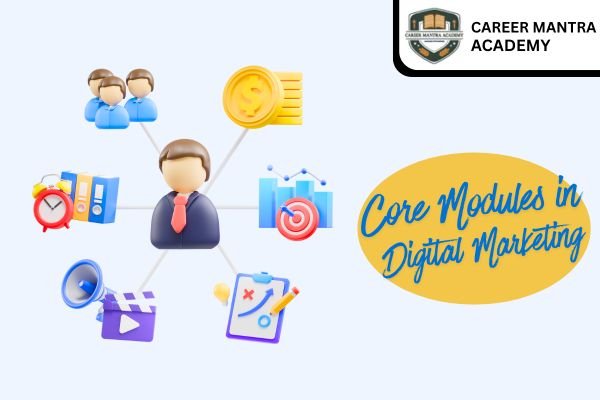
Core Modules in Digital Marketing:
A digital marketing course is divided into several core modules that help learners understand how online platforms work and how to use them effectively for business growth. Each module focuses on a different area of expertise, and together, they build a strong foundation for a successful digital marketing career. Let’s explore each one in detail:
1. Search Engine Optimization (SEO)
What is SEO?
Search Engine Optimization (SEO) is the process of improving a website’s visibility on search engines like Google, Bing, or Yahoo. When done correctly, SEO helps websites rank higher for specific keywords, making it easier for users to find them organically.
Why SEO Matters:
SEO is the backbone of digital marketing because most online experiences begin with a search query. A well-optimized website can attract thousands of visitors without paid advertising. It helps businesses build credibility, generate leads, and boost conversions naturally.
Key Components of SEO:
- On-Page SEO: Focuses on optimizing website elements like titles, meta descriptions, headers, URL structure, and internal linking.
- Off-Page SEO: Involves building backlinks, promoting content, and increasing domain authority.
- Technical SEO: Ensures the website is technically sound, fast, and mobile-friendly for better search engine crawling and indexing.
- Keyword Research: The process of identifying high-performing search terms that potential customers use.
- Content Optimization: Creating valuable, keyword-rich content that satisfies user intent.
Tools You’ll Learn in SEO:
Google Search Console, Ahrefs, SEMrush, Moz, and Ubersuggest are some popular tools used for tracking website performance and improving SEO strategies.
Career Opportunities in SEO:
After mastering SEO, learners can work as SEO Executives, SEO Specialists, Content Strategists, or Digital Marketing Analysts.
2. Search Engine Marketing (SEM) / Google Ads
What is SEM?
Search Engine Marketing (SEM) is the practice of promoting websites through paid advertising on search engines. It’s often referred to as Pay-Per-Click (PPC) marketing, where advertisers pay only when users click on their ads. Google Ads is the most popular SEM platform worldwide.
Why SEM is Important:
While SEO focuses on long-term growth, SEM delivers instant visibility. Businesses can reach their audience quickly, drive traffic, and boost conversions through well-targeted ads. It’s ideal for new businesses wanting to generate leads fast.
Core Elements of SEM:
- Keyword Research and Bidding: Identifying profitable keywords and setting bids based on competition and budget.
- Ad Creation: Writing engaging ad copies with a clear call-to-action (CTA).
- Campaign Management: Structuring campaigns into ad groups and monitoring their performance.
- Quality Score Optimization: Improving ad relevance, click-through rates (CTR), and landing page quality to reduce costs.
- Conversion Tracking: Measuring the effectiveness of ads and optimizing for better ROI.
Types of Google Ads Campaigns:
- Search Ads – Appear in Google search results.
- Display Ads – Shown on partner websites.
- Video Ads – Shown on YouTube.
- Shopping Ads – For e-commerce stores.
- App Promotion Ads – Promote mobile applications.
Tools You’ll Learn in SEM:
Google Ads Manager, Google Keyword Planner, and Google Analytics are essential tools for planning and tracking paid campaigns.
Career Opportunities in SEM:
After completing this module, learners can work as PPC Specialists, Google Ads Experts, Campaign Managers, or Performance Marketing Executives.
3. Social Media Marketing (SMM)
What is Social Media Marketing?
Social Media Marketing involves promoting products, services, or brands using social platforms like Facebook, Instagram, Twitter (X), LinkedIn, YouTube, and Pinterest. It helps businesses build a strong community, increase engagement, and improve brand awareness.
Importance of SMM:
Today, over 5 billion people use social media globally. Businesses that understand how to connect with their audience on these platforms can create long-term relationships and drive conversions effectively.
Core Areas of SMM:
- Platform Strategy: Understanding how each platform works and which audience it serves best.
- Content Creation: Designing engaging visuals, videos, and captions that align with brand messaging.
- Community Management: Interacting with followers and managing brand reputation.
- Social Media Advertising: Running paid ad campaigns on Facebook Ads Manager or LinkedIn Campaign Manager.
- Analytics and Reporting: Tracking post-performance and campaign ROI.
Popular Social Media Platforms Covered:
- Facebook & Instagram: For community engagement and paid ads.
- LinkedIn: For B2B marketing and professional networking.
- YouTube: For video marketing and long-form content.
- Twitter (X): For real-time communication and trends.
Tools You’ll Learn in SMM:
Meta Business Suite, Buffer, Hootsuite, Canva, and Social Blade are popular tools for scheduling, designing, and analyzing campaigns.
Career Opportunities in SMM:
Social Media Marketing opens doors to roles like Social Media Executive, Content Creator, Influencer Manager, and Digital Campaign Strategist.
4. Content Marketing
What is Content Marketing?
Content Marketing is the art of creating and sharing valuable, relevant content to attract and retain an audience. Unlike direct advertising, it focuses on educating, inspiring, or entertaining potential customers to build trust and long-term relationships.
Why Content Marketing Matters:
In digital marketing, “Content is King.” Every online strategy — from SEO to social media — relies on quality content to succeed. Good content not only drives traffic but also converts leads into loyal customers.
Core Components of Content Marketing:
- Content Strategy: Planning content that aligns with audience interests and business goals.
- Content Creation: Writing blogs, producing videos, designing infographics, and developing eBooks.
- Content Optimization: Using SEO techniques to make content discoverable.
- Content Distribution: Sharing content across websites, social media, and email.
- Performance Analysis: Measuring engagement and conversion through analytics.
Types of Content You’ll Learn to Create:
- Blog posts and articles
- Videos and reels
- Case studies
- Social media posts
- Newsletters
- Infographics
Tools You’ll Learn in Content Marketing:
Grammarly, Canva, HubSpot, BuzzSumo, and WordPress are essential tools for creating, optimizing, and managing content.
Career Opportunities in Content Marketing:
This module can lead to roles like Content Writer, Copywriter, Content Strategist, SEO Writer, or Brand Storyteller.
5. Email Marketing
What is Email Marketing?
Email Marketing is one of the most effective and affordable ways to reach customers directly. It involves sending personalized emails to subscribers to promote products, share news, or nurture leads.
Why Email Marketing Is Still Powerful:
Even in 2025, email marketing remains a top-performing channel for conversions. It allows businesses to communicate directly with their audience and build loyalty through consistent, value-driven content.
Core Elements of Email Marketing:
- Building an Email List: Collecting emails through sign-ups, lead magnets, or campaigns.
- Segmenting the Audience: Dividing subscribers into groups based on demographics or behavior.
- Designing Effective Emails: Writing catchy subject lines and creating visually appealing templates.
- Automation and Drip Campaigns: Sending a series of automated emails to nurture leads.
- Analytics and Optimization: Measuring open rates, click rates, and conversions to improve future campaigns.
Types of Marketing Emails:
- Promotional Emails – Highlight offers or new products.
- Transactional Emails – Confirm purchases or account actions.
- Newsletter Emails – Share regular updates or content.
- Re-engagement Emails – Win back inactive customers.
Tools You’ll Learn in Email Marketing:
Mailchimp, HubSpot, Sendinblue, and ConvertKit are popular tools for designing and automating email campaigns.
Career Opportunities in Email Marketing:
You can become an Email Marketing Specialist, CRM Executive, or Marketing Automation Expert with this skill.
6. Web Analytics
What is Web Analytics?
Web Analytics is the process of collecting, analyzing, and interpreting data from a website to understand user behavior and improve performance. It helps marketers measure the effectiveness of their campaigns and make data-driven decisions.
Why Web Analytics Is Important:
Without analytics, marketing decisions would be based on guesswork. Analytics shows what’s working, what’s not, and how to optimize for better results. It empowers businesses to understand their audience, improve ROI, and enhance user experience.
Core Components of Web Analytics:
- Traffic Analysis: Measuring where visitors come from (organic, paid, social, direct).
- User Behavior Tracking: Analyzing pages visited, time spent, and interactions.
- Conversion Tracking: Measuring leads, sales, or downloads.
- Goal Setting: Creating measurable objectives, like form submissions or purchases.
- Report Creation: Visualizing data for insights and decision-making.
Popular Analytics Tools You’ll Learn:
- Google Analytics 4 (GA4): To monitor website performance and user flow.
- Google Tag Manager (GTM): For tracking user actions like clicks or video views.
- Google Data Studio / Looker Studio: For creating visual dashboards.
Career Opportunities in Web Analytics:
This module prepares learners for roles like Digital Analyst, Data Analytics Executive, Conversion Optimization Specialist, or Marketing Analyst.
What Advanced Topics Are Included in a Digital Marketing Course?
As the digital landscape continues to evolve, advanced topics in digital marketing help learners stay competitive and future-ready. These modules go beyond the basics, focusing on modern tools, automation, data analytics, and AI-driven strategies. Advanced learning ensures professionals can design high-performing campaigns, analyze user behavior, and scale marketing efforts efficiently.
Here are some of the advanced topics included in a digital marketing course:
- Marketing Automation: Learn to automate repetitive tasks like emails, social media posts, and ad campaigns using platforms like HubSpot, Zapier, or Mailchimp.
- Artificial Intelligence (AI) in Marketing: Understand how AI tools help personalize user experiences, analyze customer data, and optimize ad performance.
- Influencer & Affiliate Marketing: Explore strategies to collaborate with influencers and partners to promote products authentically.
- E-commerce Marketing: Learn techniques for promoting online stores using product ads, retargeting, and conversion optimization.
- Online Reputation Management (ORM): Discover how to manage brand image and handle customer feedback effectively.
- Conversion Rate Optimization (CRO): Learn how to turn visitors into customers using A/B testing, UX improvements, and data insights.
- Mobile & Video Marketing: Gain skills in short-form video content, YouTube campaigns, and mobile advertising trends.
Mastering these advanced modules enables students to create data-driven, automated, and high-impact marketing campaigns that deliver measurable business results.
Which Tools and Platforms Will You Learn in Digital Marketing Training?
It’s just as important to know how to use the right tools and platforms as it is to know the ideas behind digital marketing. These tools help you plan, run, look at, and smartly improve campaigns. They help marketing be more intelligent, quicker, and focused on results. A full digital marketing training program will give you real-world experience with the most powerful and popular tools in the field.
Here are some of the major tools and platforms you’ll learn during your digital marketing training:
1. Search Engine Optimization (SEO) Tools
- SEO tools help you analyze website performance, track keywords, and improve rankings.
- Google Search Console: Monitors website visibility and indexing on Google.
- Ahrefs / SEMrush: Provides insights into backlinks, competitors, and keyword performance.
- Moz / Ubersuggest: Useful for keyword research and on-page SEO analysis.
2. Search Engine Marketing (SEM) & Paid Ads Tools
- These platforms are used for running paid campaigns and managing ad performance.
- Google Ads: The most widely used platform for running search, display, and video ads.
- Google Keyword Planner: Helps identify profitable keywords for PPC campaigns.
- Bing Ads & Facebook Ads Manager: Used for advertising on different networks.
3. Social Media Marketing Tools
- Social media tools help in content creation, scheduling, and performance tracking.
- Meta Business Suite: For managing Facebook and Instagram ads.
- Hootsuite / Buffer: Schedule and monitor posts across multiple platforms.
- Canva: Design eye-catching graphics, posts, and ad creatives.
4. Content Marketing Tools
- These tools assist in writing, editing, and optimizing content.
- Grammarly: Checks grammar and improves readability.
- BuzzSumo: Finds trending topics and content ideas.
- WordPress / Medium: Platforms to publish and manage blog content.
5. Email Marketing Tools
- Used for sending personalized campaigns and automating communication.
- Mailchimp / Sendinblue: Create and automate email marketing campaigns.
- HubSpot CRM: Manages leads, customer data, and automation workflows.
6. Web Analytics Tools
- Analytics tools help you track performance and make data-driven decisions.
- Google Analytics 4 (GA4): Tracks traffic sources, user behavior, and conversions.
- Google Tag Manager: Helps manage tracking codes without coding.
- Looker Studio: Visualizes campaign data in interactive dashboards.
7. Additional Tools & Platforms
- Ahrefs / SEMrush (for SEO & Competitor Analysis)
- Trello / Asana (for Project Management)
- Hotjar (for Heatmaps & User Experience Analysis)

What Career Opportunities Can You Get After a Digital Marketing Course?
| Career Role | Description | Key Responsibilities |
| SEO Specialist | Focuses on improving website rankings on search engines. | Keyword research, on-page/off-page SEO, technical optimization, and traffic analysis. |
| Social Media Manager | Manages brand presence on platforms like Facebook, Instagram, and LinkedIn. | Content creation, community management, social media ads, and engagement tracking. |
| PPC / Google Ads Expert | Runs paid advertising campaigns to increase leads and sales. | Campaign setup, keyword bidding, ad optimization, and ROI analysis. |
| Content Marketer / Writer | Creates engaging and valuable content to attract and retain customers. | Writing blogs, social media content, website copy, and promotional material. |
| Email Marketing Specialist | Builds customer relationships through targeted email campaigns. | Designing email templates, segmentation, automation, and performance tracking. |
| Web Analyst | Uses data to measure and improve marketing performance. | Tracking traffic, analyzing KPIs, preparing reports, and suggesting improvements. |
| Digital Marketing Executive | Handles multiple aspects of digital campaigns across platforms. | Managing SEO, social media, paid ads, and analytics. |
| Affiliate / Influencer Marketing Manager | Collaborates with influencers and affiliates to boost brand reach. | Partnership management, campaign coordination, and conversion tracking. |
| E-commerce Marketing Specialist | Promotes online products and manages sales through digital platforms. | Product listing, ad campaigns, customer targeting, and sales analytics. |
| Marketing Automation Expert | Streamlines marketing processes using automation tools. | Setting up workflows, drip campaigns, and customer segmentation. |

Why Should You Choose Career Mantra Academy for a Digital Marketing Course?
Career Mantra Academy offers digital marketing training taught by experts that will help you succeed in the real world. Students learn by doing, which gives them experience with the best tools and platforms. The academy helps students grow in their careers by giving them updated course modules, one-on-one mentoring, live projects, and help with getting a job. Career Mantra Academy can help you learn everything you need to know about digital marketing, whether you’re just starting or have been doing it for a while. You’ll be ready for a job in a competitive field.
Conclusion.
Digital marketing is no longer just an additional skill — it’s a necessity in today’s fast-paced, technology-driven world. A well-structured digital marketing course equips you with the knowledge and tools to create, manage, and optimize online campaigns effectively. From SEO and social media to analytics and automation, each module prepares you for real-world challenges and opportunities. Whether you aim to build a successful career, grow your business, or become a freelancer, mastering digital marketing opens endless possibilities for success in the digital era.
FAQs
What are the 7 types of digital marketing?
The seven types of digital marketing are Search Engine Optimization (SEO), Search Engine Marketing (SEM), Social Media Marketing (SMM), Content Marketing, Email Marketing, Affiliate Marketing, and Influencer Marketing — each helping businesses grow their online presence and reach target audiences effectively.
What topics come under digital marketing?
Digital marketing covers topics like SEO, SEM, Social Media Marketing, Content Marketing, Email Marketing, Web Analytics, Influencer Marketing, Affiliate Marketing, Mobile Marketing, and Marketing Automation — all focused on promoting brands, generating leads, and boosting online visibility effectively.
Which course is best for digital marketing?
The best course for digital marketing is a comprehensive program covering SEO, SEM, SMM, Content Marketing, Email Marketing, and Analytics. Choose a course offering practical training, certifications, and real-world projects to build hands-on experience and industry-ready digital marketing skills.
What is the future of digital marketing?
The future of digital marketing is driven by AI, automation, personalization, and data analytics. Businesses will rely more on voice search, video content, and influencer marketing to connect with audiences, making skilled digital marketers highly valuable in the coming years.
What are the 5 disadvantages of digital marketing?
Five disadvantages of digital marketing are high competition, constant algorithm changes, data privacy concerns, dependence on technology, and risk of negative feedback. Managing online reputation and staying updated with trends can be challenging for businesses without consistent effort and strategy.